A drain backup in the rainy season in Pasadena, CA often has more than one cause. Based on NOAA climate normals, about 80 percent of Pasadena’s average yearly rainfall falls from December through March, and wet weather can add water to the sewer system while roots and cracks in older pipes slow the flow.
This guide explains why a drain backup happens in the rainy season in Pasadena, CA, who is responsible for each part of the sewer line, which signs point to the lateral instead of a single fixture, and what to do first. For price ranges, the drain cleaning cost guide covers Los Angeles area figures.
Pasadena’s Rainy Season by the Numbers
Pasadena has a dry summer and a wet winter. The National Weather Service Los Angeles/Oxnard office reports 1991 to 2020 monthly normals for Pasadena, based on NOAA National Centers for Environmental Information data, that add up to 20.08 inches a year:
- January 4.51 in
- February 5.16 in
- March 3.03 in
- April 1.11 in
- May 0.48 in
- June 0.21 in
- July 0.06 in
- August 0.03 in
- September 0.22 in
- October 0.84 in
- November 1.10 in
- December 3.33 in
December through March accounts for 16.03 of those 20.08 inches, or about 80 percent (calculated from the monthly normals). June through September adds up to about half an inch. Rainfall in any single winter can run well above or below these averages, so the normals describe a typical pattern and not a forecast.
Why a Drain Backup Happens in the Rainy Season in Pasadena, CA
Rain does not usually clog a household drain by itself. It tends to expose weaknesses that were already in the line. Three causes come up most often:
Water entering the sewer. The EPA lists sewer defects that allow stormwater and groundwater into the system as one cause of overflows and backups. Cracks and loose joints, the same openings roots use, can also let groundwater seep in when the soil is saturated.
Roots in older laterals. Roots can enter small cracks and loose joints and then grow inside the line (HomeServe). A line that is partly blocked by roots can still drain in dry weather and then back up when more water is entering it.
The age of the pipe. Published lifespan estimates are 50 to 60 years for clay sewer pipe and up to 100 years for cast iron under ideal conditions (HomeServe). Water that backs up behind a blockage can add stress to an older pipe.
Who Is Responsible When a Drain Backs Up in Pasadena?
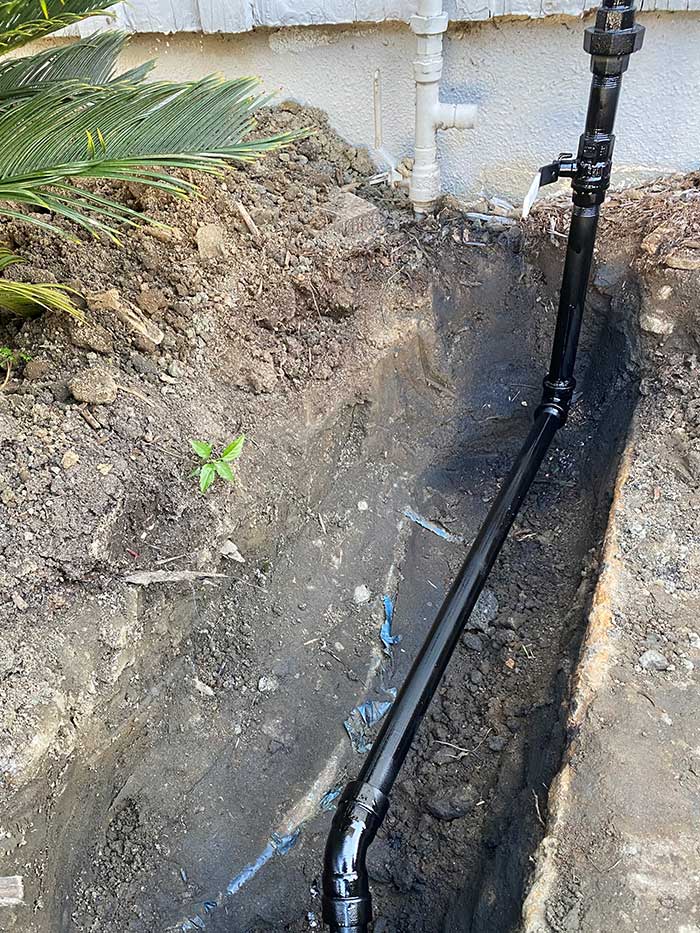
The City of Pasadena maintains the public sewer main under the street, and the property owner is responsible for the lateral that runs from the building to the main. The City’s Street Maintenance page also says it cleans its sewer lines on a yearly schedule to clear grease, roots and debris.
In practice, a blockage in the public main is a City matter, while a blockage in the lateral or in a fixture drain is a property owner matter. If it is unclear where the problem is, the City Service Center, (626) 744-7311, is the number the City lists for sewer questions. Properties in unincorporated areas such as Altadena fall under LA County Public Works instead, which also states that the owner maintains the lateral. The drain cleaning in Altadena guide covers that case.
Signs of a Rainy Season Drain Backup in Pasadena, CA
These signs usually point to a problem in the lateral or the main line instead of a single fixture:
- Several fixtures drain slowly during or after a storm.
- A toilet or drain gurgles when water runs elsewhere in the house.
- Water or sewage appears at the lowest drain in the home, such as a floor drain, tub or shower.
- Sewage odors appear near a drain, a cleanout or in the yard.
- A clog returns soon after it was cleared, especially in wet weather.
A single slow fixture usually points to a blockage near that fixture. A backup at the lowest drain, or at several fixtures at once, points to the lateral or the main.

What to Do When a Drain Backs Up During a Storm
Use these steps when water or sewage backs up during or after a storm.
- Stop using water in the house
Avoid running sinks, showers, toilets, dishwashers and washing machines, since more water entering a blocked line can push more up through the lowest drain.
- Note what is affected
Check whether one fixture or several are backing up, whether the lowest drain in the home is involved, and when the problem started. Take photos of any water or damage for your records.
- Check whether neighbors are affected
If neighbors or the street are affected as well, the public main may be involved. In that case, call the City Service Center at (626) 744-7311.
- Clear access to the cleanout
If you know where the cleanout is, clear the area around it so a technician can reach it.
- Call a licensed plumber
If the problem appears limited to your property, a licensed plumber can clear the line, and a sewer video camera inspection can show whether roots, cracks or offset joints caused it. Ask for the contractor’s license number and check it on the CSLB license lookup.
Preventing a Rainy Season Drain Backup in Pasadena, CA
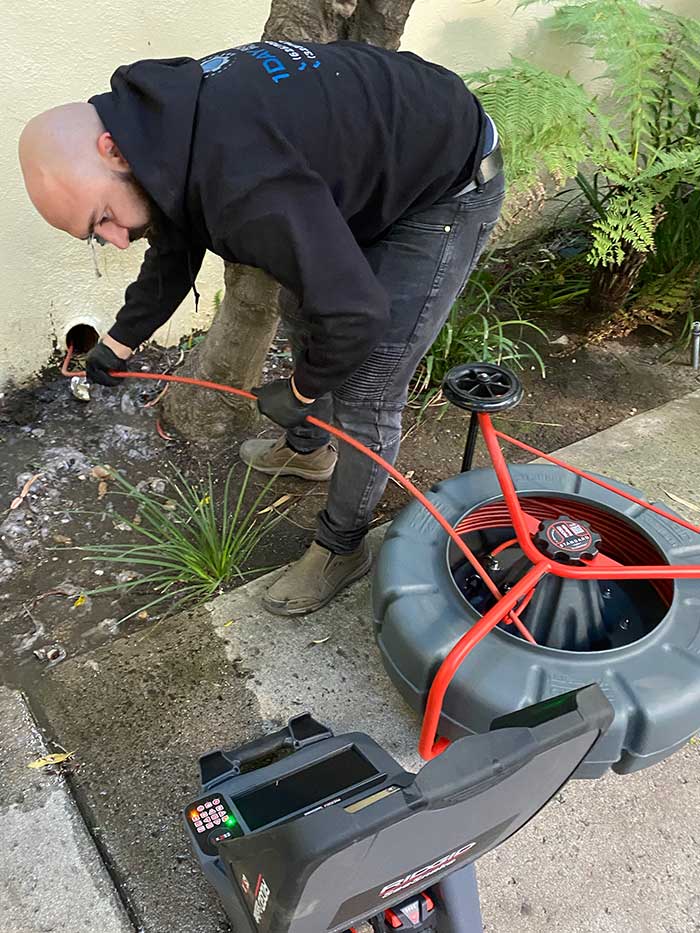
If a drain has backed up before, or the home still has original clay or cast iron piping, a sewer video camera inspection before the wetter months shows the inside of the lateral, so any roots, cracks or offset joints can be dealt with first. Roots and buildup can be cleared with a drain machine or with hydro jetting, depending on the condition of the pipe.
LA County Public Works also gives these practical steps for keeping a lateral flowing:
- Keep grease, fats and oils out of drains, and collect cooled grease in a sealed container for the trash.
- If the property has a backwater valve, have it maintained regularly so it works properly.
- Know where the cleanout is and keep the area around it clear.
Drain Cleaning in Pasadena, CA
1 Day Rooter & Plumbing, Inc. provides drain cleaning in Pasadena, including clogged drain cleaning, hydro jetting and sewer video camera inspection, from its Pasadena location. The plumbing services in Pasadena, CA page lists the full range of services. To discuss a specific drain, call (626) 702-0202 or use the contact page.
1 Day Rooter & Plumbing, Inc.
1310 N Sierra Bonita Ave, Pasadena, CA 91104
Phone: (626) 702-0202
Service area: Pasadena, CA
Frequently Asked Questions About Drain Backup in the Rainy Season in Pasadena, CA
Wet weather can send extra stormwater and groundwater into sewer lines that have cracks or loose joints, and a line that is already partly blocked by roots or debris can back up when that happens. The EPA lists sewer defects that let stormwater and groundwater into the system among the causes of sewer backups. In Pasadena, about 80 percent of the average yearly rainfall falls from December through March.
The City of Pasadena maintains the public sewer main under the street, and the property owner is responsible for the lateral that connects the building to the main. If it is unclear where the blockage is, the City Service Center at (626) 744-7311 takes calls about City sewer problems.
Stop using water in the house, note which fixtures are affected and whether the lowest drain is involved, and find out whether neighbors have the same problem. If the public main may be involved, call the City Service Center. If the problem appears limited to your property, a licensed plumber can clear the line and inspect it.
A sewer video camera inspection shows the inside of the lateral, so a technician can see roots, cracks, offset joints or buildup and then decide between cleaning and repair.
Sources
- Los Angeles Almanac, Pasadena monthly average precipitation (National Weather Service Los Angeles/Oxnard; NOAA NCEI 1991 to 2020 normals)
- City of Pasadena Public Works, Street Maintenance: Sewer & Storm Drains
- City of Pasadena Public Works, Contact
- U.S. Environmental Protection Agency, Sanitary Sewer Overflows (SSOs)
- LA County Public Works, Sewer Maintenance: Customer Information
- HomeServe, How Long Do Sewer Lines Last? (published October 22, 2025)
- California Contractors State License Board, Check a License